
The Psychology of Design in Restaurants: How Spaces Shape Our Appetite for Wonder
The most memorable restaurants in the world rarely rely on food alone. They seduce us long before the first plate appears, using architecture, atmosphere, and subconscious cues to draw us deeper into the experience. From the lantern-lit alleyways of Marrakech to the timber-framed izakayas of Kyoto, great restaurants understand a universal truth: design is the silent maître d’, ushering us toward ease, excitement, or intrigue without saying a word.
This psychology of space i.e how lighting, shape, scale, and texture influence behavior, is not a modern invention. It is ancient and global. The Romans engineered dining courtyards that flooded guests with light to signal abundance. Ottoman cafés arranged seating in careful clusters of three. This is a practice design anthropologist Edward T. Hall once described as “the smallest arrangement that feels like a community.” Scandinavian eateries place mirrors strategically to reflect candlelight, making small rooms feel twice their size. This interesting technique is one that architect Arne Jacobsen famously championed as “the art of borrowing space.”
Today, restaurants use these same principles with new precision: shaping mood through layout, encouraging social connection with geometry, or invoking a sense of theater with height and scale. And nowhere is this interplay more fascinating than in Mombasa, a city layered with centuries of Swahili, Omani, Portuguese, Indian, and British architectural influence.
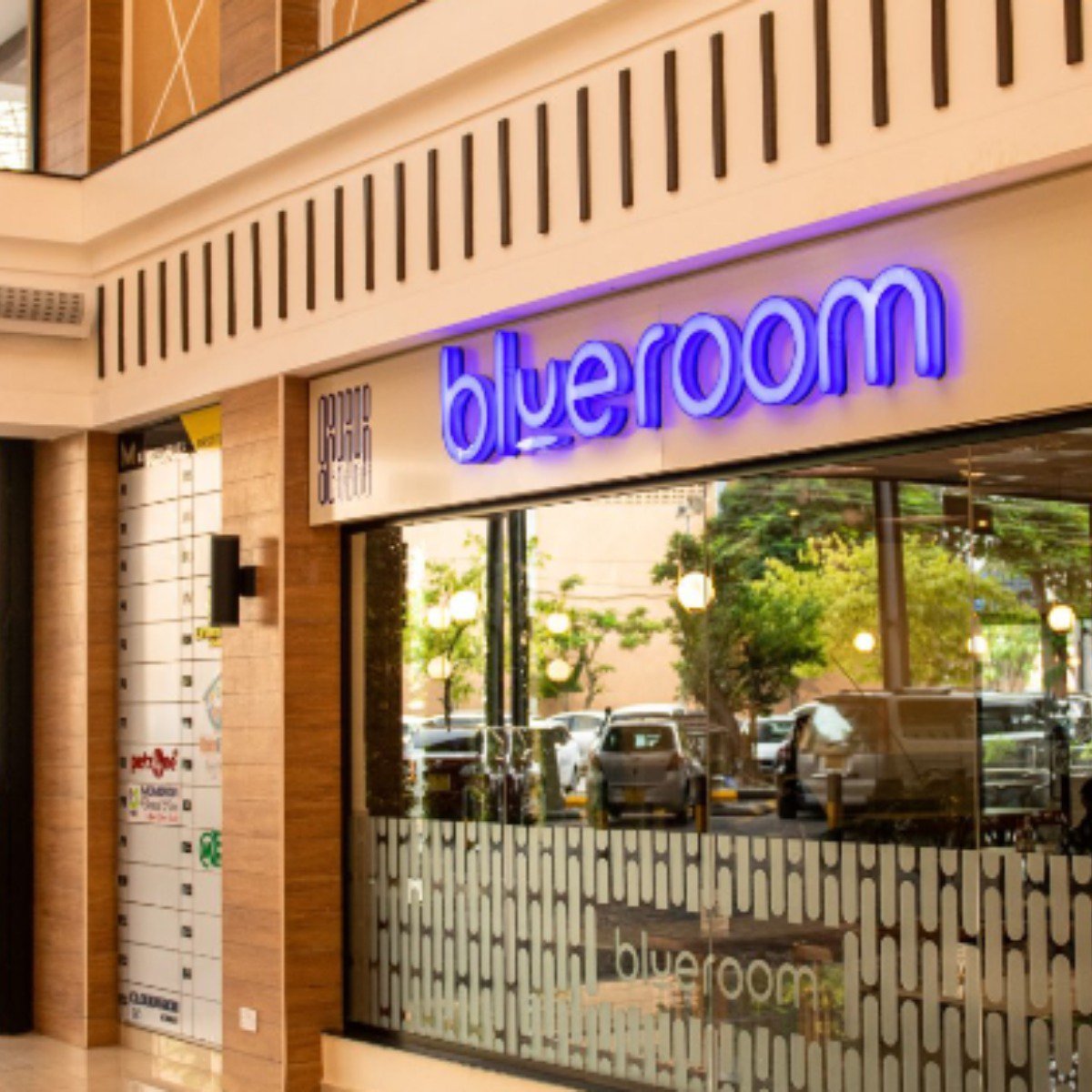
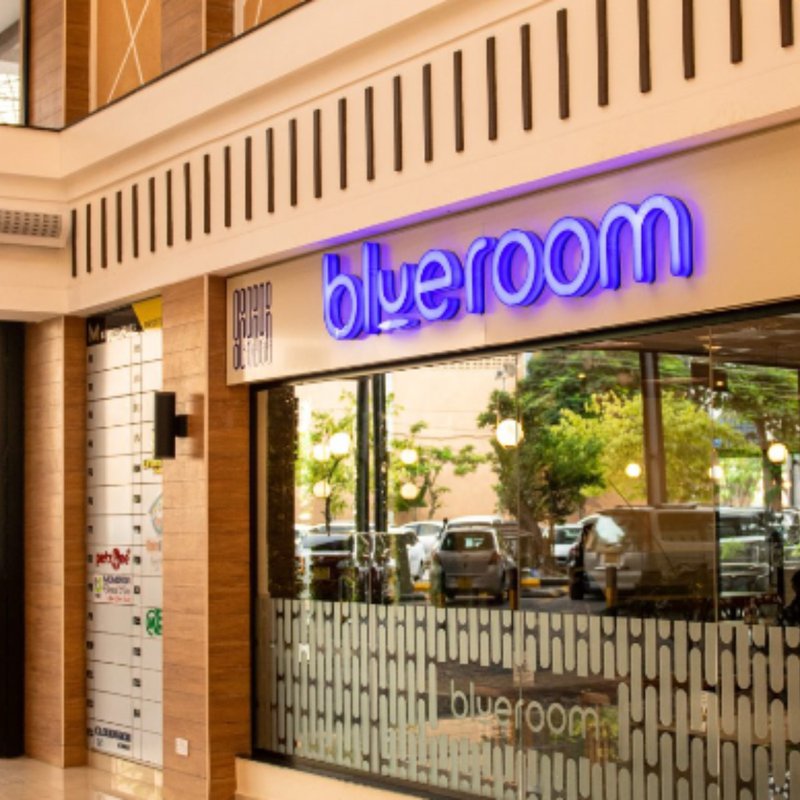
At Blue Room Mombasa we express this dance of psychology and design across our different locations, each drawing on global principles and local history to craft spaces that do more than serve meals. They shape moods. They ignite curiosity and they invite lingering.
Before we reach them, though, let’s take a journey through the design psychology that makes a restaurant not just somewhere you eat but somewhere you want to return.
The Rule of Threes: Human Comfort in Trios
Across cultures, designers have long relied on the rule of threes, a principle rooted in cognitive psychology. Humans naturally find harmony in triads: three colors, three textures, three lighting levels, or three focal points in a room. This balance feels both structured and organic; just enough complexity to intrigue the brain, but not enough to overwhelm it.
Hospitality designer Ilse Crawford, known for her work at Soho House and Ett Hem in Stockholm, once said, “ Spaces only feel alive when they acknowledge the human scale and the human scale is rarely singular or symmetrical. It lives in threes.”
In restaurants, this might appear as:
- Three layers of lighting: ambient, task, and accent
- Three seating styles: communal, intimate, and transitional
- Three material contrasts: soft, hard, and reflective
The result is an environment that feels curated yet natural, deliberate yet comfortable. Visitors may not consciously detect the rule at play, but they feel its balance. Curiosity rises; the space feels “just right.”
You can see this principle woven with quiet confidence into Arabian Lights at Blue Room Haile Selassie, where hanging clusters and horizontal partitions of lanterns, create visual rhythm against a neutral floor and furnishings. The effect is subtle but powerful, a reminder that good design is not loud; it’s simply unavoidable. Visitors, from seasoned travelers, to design-savvy locals, will recognize echoes of Marrakech, Dubai, and even Andalusian courtyards, yet unmistakably feel the coastal soul of Mombasa in every detail.
Mirrors, Height, and the Illusion of Expansion.
In cities where land is precious and restaurants are often compact; designers have long used psychological tools to stretch the boundaries of space. Mirrors are the most timeless among them. The French used them in the mirrored brasseries of the 19th century to multiply candlelight and energy; the Japanese used reflective lacquer to blur the boundaries between interior and exterior.
High ceilings achieve a related effect: they elevate the spirit as much as the eye. Architectural historian Sigfried Giedion once noted that verticality evokes “freedom and possibility,” while giving guests a subconscious sense of breathing room.
This combination of reflective surfaces and generous height always makes diners feel relaxed, unhurried, and open. It creates a sense of abundance and optimism.
At Blue Room Nkrumah Road, the use of mirrors and vertical space channels exactly this principle. The ceilings lift, the walls seem to widen, and the room feels like it breathes with the sea breeze of old-town Mombasa nearby. The architecture creates an optical generosity that feels cosmopolitan yet grounded. It is the kind of design often praised in European café culture which means an environment that feels twice its size without ever losing warmth.
Psychologically, such spatial openness reduces cognitive load. Guests feel more comfortable, more exploratory, more at ease to linger even in the heart of downtown Mombasa. Whether you’re a traveler escaping the midday heat or a local grabbing a coffee, the space welcomes you with this illusion of openness that is airy, modern and quietly theatrical.
Greenery as Privacy: Nature’s Soft Partition
Around the world, greenery has long been used in hospitality not just for beauty, but for psychological comfort. In Rio’s botanical-inspired cafés, plants create cocoons of intimacy. In Singapore, towering palms break up bustling food courts. Even in the Moroccan riads of Fez, courtyard citrus trees offer both shade and separation.
Biophilic design, the practice of integrating nature into built environments, reduces stress and enhances feelings of safety. But plants also serve a more practical purpose: they gently define personal space. Instead of hard walls or partitions, greenery creates a sense of privacy without isolation. The boundary feels welcoming, not restrictive.
This principle comes alive at Blue Room Likoni Mall and Haile Selassie, where plants are used to frame seating areas with softness and intention.
Here, design shifts into nature’s language. Plants soften the edges of the room, break sight lines, and create a sense of personal refuge. This effect can be observed in wellness-centered spaces around the world. It’s a restaurant layout that whispers rather than shouts, gently encouraging calm curiosity.
It’s the kind of environment that makes a simple coffee feel like a pause from the world.
Mombasa’s Architectural DNA: A City That Shapes Its Restaurants
Design psychology in Mombasa doesn’t occur in a vacuum. The city itself carries centuries of shape, color, and spatial logic. From the Arab traders and Omani rulers who favored flat roofs, minarets, and enclosed courtyards, to the Portuguese whose fortifications and stonework still echo in corners of the Old Port.
Walk through the island and you’ll notice:
- Very fw gable roofs: a nod to centuries of Arabian architectural influence
- Many flat roofs that once served as nighttime gathering spaces in the coastal heat
- Fragments of Portuguese stone geometry around Fort Jesus and the old harbor edge
Restaurants in Mombasa often inherit or reinterpret this history, consciously or not. The spatial choices: openness, enclosure, shadows and breezeways all recall traditions of hospitality that predate contemporary design language by hundreds of years.
Blue Room, with its heritage woven into the city’s memory, naturally draws from this architectural lineage while layering modern global sensibilities on top.
Our design is global, yes, but rooted in the Swahili-Arabic sensibilities of Mombasa: soft geometry, warm tones, and spatial storytelling. The result is places that spark curiosity long before the menu arrives.
An Invitation to Experience Design in Motion
Design psychology is best understood not through theory but through presence. Colors, height, texture, and light only reveal their full effect when you are surrounded by them.
If your travels or your daily routine brings you through Mombasa, consider this an invitation to experience these techniques firsthand:
- See the rule of threes and the interplay of shadow and pattern with the Arabian Lanterns at Blue Room Haile Selassie.
- Witness the illusion of space through mirrors and height at Blue Room Nkrumah Road.
- Step into the privacy and calm created by greenery at Blue Room Likoni Mall.
Each space tells a different story. Each uses the psychology of design to spark curiosity, comfort, and discovery. And each celebrates the layered architectural heritage of Mombasa itself. This is a city where every roofline, shadow, and breeze is part of a centuries-old design conversation.
When you’re ready, come see the conversation continue one room at a time.